

When you type a domain name you want to connect to into your browser, your application must first translate it into an IP address that it will use to connect.
The way these host names are resolved to their corresponding IP addresses is called Domain Name Resolution. In almost all operating systems, whether Apple, Linux, Unix, Netware, or Windows, most of the resolution from domain names to IP addresses is done through a procedure called DNS. DNS stands for Domain Name System and is the standard domain name resolution service used on the Internet. Another way to resolve domain names without using the Domain Name System is to use your HOSTS file. Almost every operating system that communicates over TCP/IP, the communications standard on the Internet, has a file called a HOSTS file. This file allows you to create mappings between domain names and IP addresses. Another way to think of a hosts file is as an address translator and router.
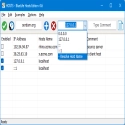
BlueLife Hosts Editor 1.6 Download
Sordum.orgTotal downloaded program :6 internet NetWork
Tags: , hosts file editor, Editor's rating out of 5 stars (5) So what do you think?


